

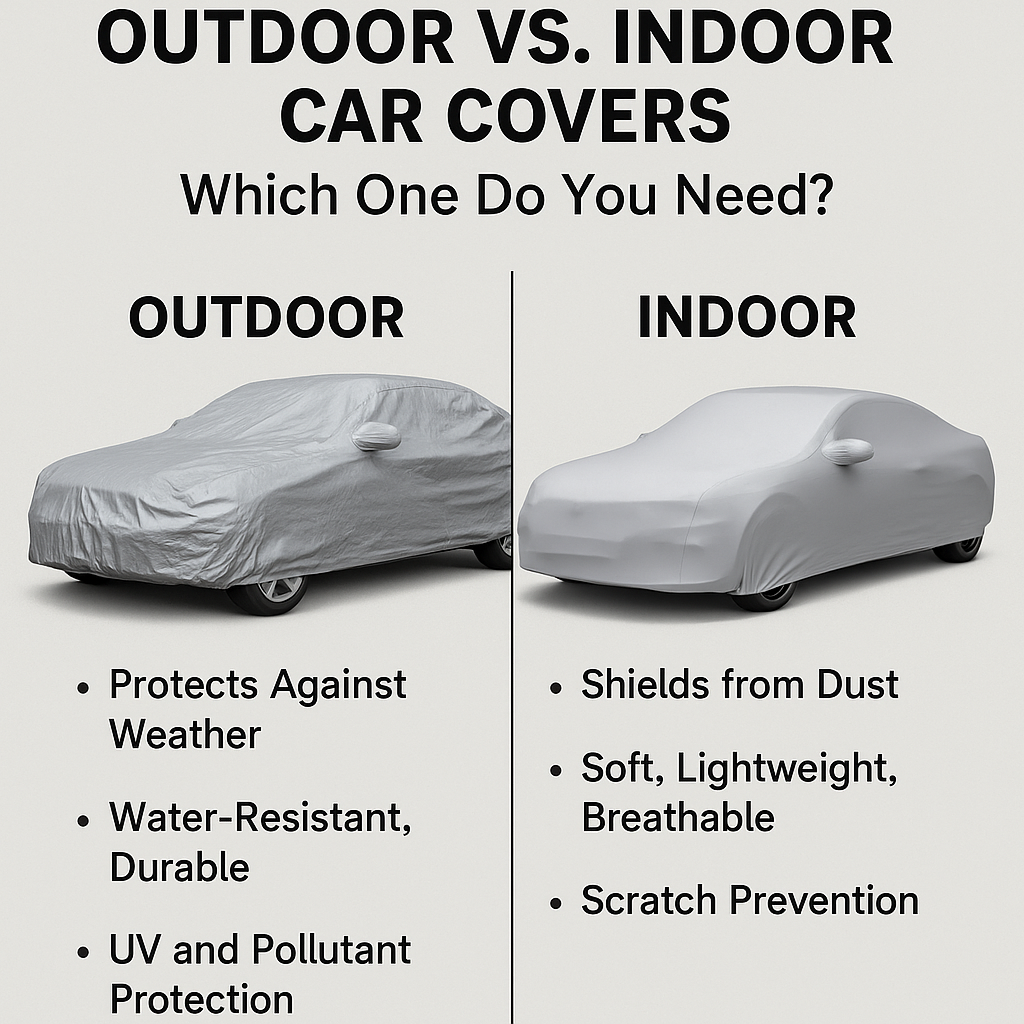

Outdoor vs Indoor Car Covers: Which One Do You Need?
Understanding Car Covers: Why the Right Choice Matters
Car covers protect your vehicle from environmental damage. Whether parked indoors or outdoors, your car faces threats daily. Choosing between outdoor and indoor covers depends on where and how you store your car. Let’s break down their differences, benefits, and ideal use cases.
Benefits of Outdoor Car Covers
Outdoor car covers provide full protection from the elements. They’re designed to handle:
-
UV rays
-
Rain and snow
-
Dust and wind
-
Tree sap and bird droppings
These covers are built tough. They're often water-resistant and ideal for vehicles parked outside for extended periods. Their multi-layer construction ensures durability and long-lasting performance. With proper use, outdoor covers keep your vehicle's paint vibrant and free from weather-related damage.
Materials Used in Outdoor Car Covers
Top-quality outdoor covers feature advanced materials. They often include:
-
UV-reflective outer layers: Block intense sunlight and reduce fading
-
Soft inner linings: Gentle on paint and prevent scratches
-
Breathable fabrics: Reduce condensation and stop mold growth
Some models even offer heat resistance and reinforced seams. These help the cover last longer and stay effective across different climates.
When to Choose an Outdoor Car Cover
If your vehicle is parked in a driveway, on the street, or in an open area, an outdoor cover is a must. It’s perfect for:
-
Daily drivers parked outside
-
Classic cars stored seasonally
-
Regions with unpredictable weather
Even in milder climates, your car is exposed to UV rays and airborne pollutants. An outdoor car cover maintains its appearance and resale value.
Benefits of Indoor Car Covers
Indoor covers focus on preserving a clean, polished finish. They’re best for cars stored in garages or controlled environments. Indoor covers protect against:
-
Dust and fine particles
-
Minor scratches from accidental bumps
-
Swirl marks from moving around your garage
They're soft, breathable, and easy to handle. If you store a show car, collector’s model, or luxury vehicle indoors, this is the ideal choice.
Materials Used in Indoor Car Covers
Indoor car covers are made from gentle, stretchable fabrics like:
-
Cotton blends: Breathable and natural
-
Fleece: Cushions against minor impact
-
Stretch satin: Offers a sleek, custom look
These materials hug the vehicle’s curves while staying lightweight and easy to manage. They’re also effective at preventing static buildup.
When to Choose an Indoor Car Cover
Use an indoor cover if your vehicle stays in a garage for long periods. It’s perfect for:
-
Rarely driven vehicles
-
High-end collector cars
-
Clean, dust-free storage spaces
Even inside a garage, your car can collect dust, get scratched, or suffer from accidental spills. A soft indoor cover avoids all of that.
Key Differences Between Outdoor and Indoor Covers
Let’s compare the two options side-by-side:
Weather Protection
-
Outdoor: Blocks UV rays, rain, wind, and snow
-
Indoor: Guards against dust, dings, and scratches
Material Strength
-
Outdoor: Durable, multi-layer, and heavier
-
Indoor: Lightweight, soft, and breathable
Appearance and Fit
-
Outdoor: Built for strength, not always snug
-
Indoor: Tailored fit with smooth contours
Storage Use
-
Outdoor: Best for long-term outdoor parking
-
Indoor: Ideal for garage-kept vehicles
Climate and Usage Considerations
Your local climate should influence your decision. If you live in:
-
Hot, sunny areas: Go with a UV-resistant outdoor cover
-
Rainy or snowy regions: Choose a waterproof and breathable outdoor cover
-
Humid zones: Ensure your cover allows air flow to prevent mold
Indoor covers suit clean, climate-controlled garages. In areas with pets, kids, or high traffic in your garage, added protection is crucial.
Custom-Fit vs Universal Car Covers
Fit matters. Here’s why:
-
Custom-fit covers: Designed for your specific vehicle model. They offer precise coverage and minimal movement. These reduce wind flapping and potential scratching.
-
Universal covers: More affordable and widely available. But they might not fit snugly. Loose fabric can shift or expose areas of the car.
For long-term protection or valuable vehicles, custom-fit is worth the investment.
Ease of Use and Storage
Both types of car covers are easy to install. However:
-
Indoor covers are lighter, compact, and effortless to fold
-
Outdoor covers are bulkier but often include carrying bags
Always clean your car before covering it. Dirt or debris can cause micro-scratches if trapped beneath the fabric. Regular washing of the cover also ensures effectiveness and longevity.
Final Thoughts: Which Car Cover Is Right for You?
Your choice depends on your car’s location and your priorities.
-
Choose outdoor covers if your vehicle is exposed to the elements. They offer tough, multi-layered protection for year-round weather defense.
-
Choose indoor covers if your car is parked in a garage and you want to keep it spotless, scratch-free, and showroom-ready.
Think about your local climate, how often you drive, and the value of your car. A cover is a small investment that can save you hundreds in paint repair and detailing.
Protect your vehicle the right way. Whether indoor or outdoor, the right cover keeps your car looking its best for years to come.
Learn More About Us:
Website: www.polcoindia.com
Facebook: https://www.facebook.com/PolcoCreationPvtLtd/
Instagram: https://www.instagram.com/polco_covers/
Linked In: https://www.linkedin.com/company/1040966/admin/dashboard/
Twitter: https://x.com/Polco_India


Leave a comment
This site is protected by hCaptcha and the hCaptcha Privacy Policy and Terms of Service apply.